An international advantage
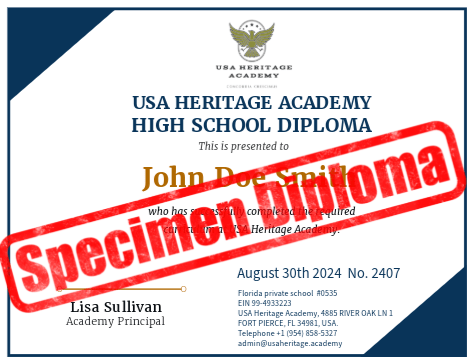
In today’s increasingly interconnected world, the ability to demonstrate a breadth of educational experience and cultural understanding is more important than ever. For European students, earning a US High School Diploma alongside their national qualifications offers a unique set of advantages, enhancing their academic profile and broadening their future opportunities.
1. Demonstrating Mastery of English
English is the global language of commerce, technology, and academia. By completing a US High School Diploma, European students can provide tangible proof of their proficiency in English. This certification is particularly valuable for students aiming to study at universities in English-speaking countries, as it signals readiness for rigorous academic discourse in the language.
Moreover, the diploma often includes advanced coursework, essays, and presentations that deepen linguistic and analytical skills, showcasing not just competence but mastery.
2. Cultivating Independent Study Skills
Many US high school programs place a strong emphasis on project-based learning, research assignments, and electives that require self-direction and initiative. These elements encourage students to take responsibility for their education, cultivating independent study habits that are essential for success in higher education.
For European students accustomed to more structured learning environments, the US system’s focus on personal choice and accountability provides a complementary skill set. This adaptability is especially appealing to universities and employers, who value candidates capable of thriving in diverse educational and professional settings.
3. Understanding American Culture and Perspective
A US High School Diploma is more than an academic credential; it’s a window into American values, history, and cultural perspectives. Through coursework in subjects like US History, Government, and Literature, students gain insights into the foundational principles and societal trends that shape one of the world’s most influential countries.
This cultural literacy can be an asset in fields such as international relations, global business, and media, where understanding diverse viewpoints is crucial. It also enhances students’ ability to connect with peers from around the world in an increasingly globalized educational environment.
4. Expanding University Opportunities
Holding a US High School Diploma alongside European qualifications makes students more competitive candidates for universities worldwide. For US institutions, this dual qualification demonstrates a readiness to adapt to an American academic environment. For European universities, it signals that the student has gone beyond the standard curriculum, showcasing ambition and a global mindset.
In some cases, the US diploma’s inclusion of AP (Advanced Placement) courses or similar advanced coursework can even lead to college credit, saving time and money in higher education.
5. Diversifying Academic Experience
The US education system’s broad and flexible approach allows students to explore a wide array of subjects, from the arts and sciences to vocational training. This flexibility enables European students to pursue interests not always available in their national systems, such as creative writing, advanced computing, or specialized STEM courses.
For students with specific career goals, this diversification is invaluable, providing a chance to build a more comprehensive academic portfolio.
6. Preparing for Global Citizenship
By navigating two distinct educational systems, students develop a broader worldview and an enhanced ability to navigate cultural and institutional differences. This global competence is increasingly sought after in a world where cross-cultural communication and collaboration are the norm.
Conclusion
For European students, earning a US High School Diploma is more than an academic achievement; it’s a strategic investment in their future. By demonstrating proficiency in English, independent learning capabilities, and a nuanced understanding of American culture, students position themselves as adaptable, ambitious, and globally aware individuals. Whether their aspirations lie in studying abroad, pursuing international careers, or simply broadening their intellectual horizons, the dual qualification equips them with the skills and experiences needed to thrive in a rapidly changing world.




 USA Heritage Academy