
“To have masters in village schools / To teach ’em classics and not hog-wash.”
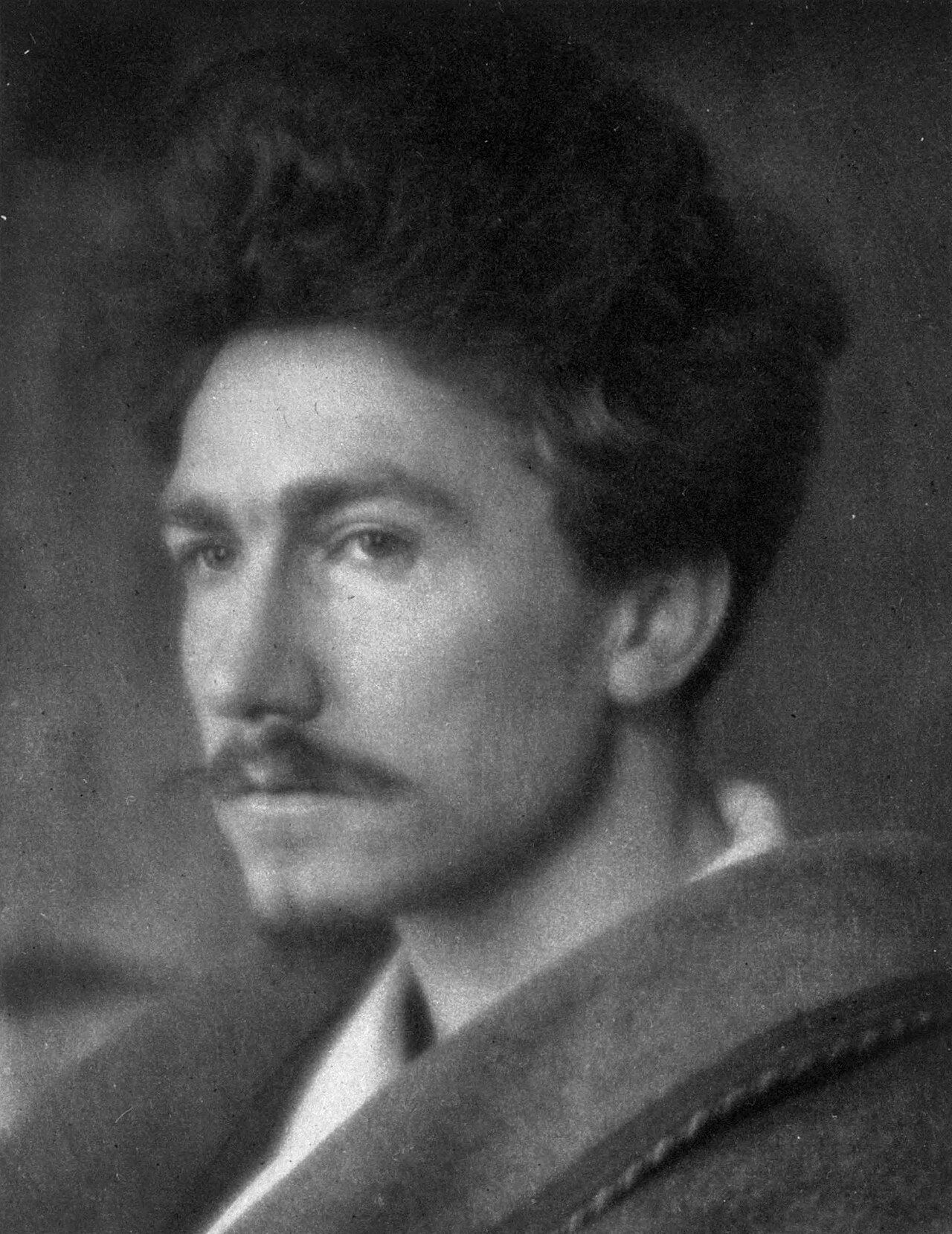
Ezra Pound’s characteristically abrasive lines contain a serious educational idea. The great inheritance of civilisation should not be reserved for specialists or elites. It belongs in schools — including ordinary schools, for ordinary children.
Pound himself is hardly an uncomplicated guide. His disastrous political enthusiasms are a reminder that education does not automatically confer wisdom.
There is something distinctly American about that conviction.
America’s educational tradition was never uniform, nor should we romanticise it. Access to education was profoundly unequal. Yet from the colonial period onwards there was a striking assumption that a free society required educated people — and that education meant more than acquiring useful skills.
Boston Latin School, founded in 1635, consciously modelled itself on the classical grammar-school tradition, teaching Latin and Greek. In 1647 Massachusetts required larger towns to establish grammar schools capable of preparing young people for university, explaining that “learning” should not be allowed to disappear from Church and Commonwealth.
At colonial Harvard, students encountered Latin, Greek, rhetoric, logic, philosophy, mathematics and natural science. At its first commencement in 1642, graduates demonstrated their learning through disputations involving Latin, Greek and Hebrew.
The point was not that every American should become a classicist. It was that education involved admission into a body of knowledge larger than oneself.
The same connection between knowledge and liberty appears with remarkable force in Thomas Jefferson.
In his 1779 Bill for the More General Diffusion of Knowledge, Jefferson argued that citizens needed knowledge of history so that, by understanding “the experience of other ages and countries”, they might recognise ambition and tyranny when they encountered them. He also wanted those possessing ability and virtue to receive a liberal education regardless of wealth or birth, so that they might be capable of guarding the rights and liberties of their fellow citizens.
That is a rather different conception of education from simply making pupils “college and career ready”.
Education certainly should prepare a young person for further study and productive work. But Jefferson’s argument suggests that schooling also prepares someone to be free.
And freedom requires knowledge.
This is why E. D. Hirsch’s defence of “core knowledge” remains important. The fashionable language of education often concentrates upon skills: critical thinking, creativity, collaboration, problem-solving and “learning how to learn”. But these capacities cannot operate in a vacuum. One cannot think critically about the Constitution without knowing something about the Constitution. One cannot judge an historical claim without history, interpret literature without language and literary knowledge, or reason scientifically without science.
Nor did the American tradition separate literacy entirely from moral and cultural formation. The enormously influential nineteenth-century McGuffey Readers taught children progressively more difficult reading while using literature and stories concerned with character, effort and virtue.
We need not reproduce the curriculum of 1635, 1779 or 1836. Nor should recovering an inheritance mean recovering the exclusions of the past.
But we might recover something of their confidence.
There are things worth knowing.
There are books worth reading because they are great books. There are historical events that a young American ought to understand. Mathematics and science reveal realities that transcend opinion. Art and music can educate perception. The religious and philosophical questions with which humanity has struggled for centuries cannot simply be dismissed as irrelevant because they are old.
Newman called this liberal education: knowledge pursued not merely as a tool for some further purpose, but because understanding itself enlarges the human person.
This also explains why serious education is profoundly democratic.
If schools cease to transmit knowledge, affluent families will usually find other ways of providing it: books, travel, conversation, tutoring and cultural experiences. Those without such advantages are more dependent upon school to open those doors. A knowledge-rich education therefore does not restrict opportunity. It extends it.
At its best, a school takes every pupil beyond the limits of his or her immediate surroundings. It opens the worlds of science, mathematics, history, music, art and literature — worlds which even a comfortable childhood might never reveal unaided.
That is an educational inheritance worth renewing.
We inherit before we innovate.
We learn before we judge.
And knowledge gives freedom something solid on which to stand.
Written by Ferdi McDermott, Principal of USA Heritage Academy: “For the initial quotation from Pound and for many of the ideas here, I am indebted to Professor Antony O’Hear, a great champion of liberal education. Here is a lecture of his, beginning with Pound and discussing many of these ideas from a more British standpoint.“


Leave a Reply